Friday, July 25, 2014

#THISisFAAntisemetism

"The five questions Sen. Cruz is asking are below:
  1. Was this decision a political decision driven by the White House? For instance, who was this decision made by - a career official, a political appointee, or someone else (at the FAA, State Department or White House?)
  2. If the FAA’s decision was based on airline safety, why was Israel singled out, when flights would be permitted into Afghanistan, Pakistan, and Yemen?
  3. What was the FAA’s ‘safety’ analysis that led to prohibiting flights to Israel, while still permitting flights to Ukraine—where a commercial airline flight was just shot down with a BUK missile?
  4. What specific communications occurred between the FAA and the White House?  And the State Department?  Why were any such communications necessary, if this was purely about airline safety?
  5. Was this a safety issue, or was it using a federal regulatory agency to punish Israel to try to force them to comply with Secretary Kerry’s demand that Israel stop their military effort to take out Hamas’s rocket capacity?"

source:
Cruz: I Will Hold All State Department Nominees Until Questions Are Answered About Israeli Flight Ban | Ted Cruz | U.S. Senator for Texas

Monday, July 21, 2014

#THISIsraelity

"My children and I have learned new words in Hebrew this summer, azakah (alert) andmiklat/mamad (shelter). My eight-year-old can explain how the Iron Dome was invented and likes to point out that it isn’t an actual dome at all. He has now added shelters to all of his worlds on Minecraft. My thirteen-year-old and I have a new favorite iPhone App: Red Alert."
Source:
http://blogs.timesofisrael.com/should-i-stay-or-should-i-go-now/#ixzz388o7BEp9

Thursday, May 22, 2014

#THISisConservativeCannibalism

The super PAC, named Mississippi Conservatives to emphasize its homegrown roots, has bought three weeks of airtime on stations across the state for a commercial attacking State Senator Chris McDaniel, who is running against Mr. Cochran.
- ‘Super PAC’ Is Formed in Mississippi to Protect 6-Term Senator in G.O.P. Primary - The New York Times By JONATHAN MARTIN Posted on JAN. 30, 2014
A super PAC supporting Mississippi Sen. Thad Cochran is trying to turn the tables on his tea-party-backed challenger in the GOP primary, accusing state Sen. Chris McDaniel of being (of all things) soft on public debt. But to do that, the PAC’s TV ad is twisting the facts.
Henry Barbour, a lobbyist and adviser to Mississippi Conservatives PAC, told the New York Times that the group’s backers are concerned that the Republicans could lose the seat if McDaniel beats Cochran in the primary.
Henry Barbour also told the Times that his uncle, former Mississippi Gov. Haley Barbour, will help raise money for the group
In fact, of the 23 bills cited by the Mississippi Conservatives PAC as evidence of McDaniel’s lack of conviction, Barbour signed all 13 that went to his desk — increasing the state debt by $711.3 million. That includes one bill that McDaniel abstained from on the final vote (H.B. 1701 in 2010).
One could just as easily make the claim, using the Mississippi Conservatives’ own data, that Barbour increased the debt by more than McDaniel.
We take no position on the merits of the Common Core standards. We merely point out that the TV ad from the Barbour-backed group overstates its case by omission, not commission. Yes, McDaniel voted for Common Core funding, but it was a small amount in massive bills to fund the state’s public schools that were passed without objection. And the Common Core standards had the early support of the former governor who is reportedly raising money to help underwrite the ad that accuses McDaniel of being deficient in his opposition to the Common Core standards.
- Distortions in Mississippi GOP Primary - Factcheck.org by Eugene Kiely, with Madeleine Stevens Posted on February 12, 2014
A pro-Cochran super PAC associated with former Mississippi Gov. Haley Barbour is already on the airwaves to define upstart conservative state Senator and challenger Chris McDaniel five months before the primary.
And even Mississippi Gov. Phil Bryant, who on Sunday endorsed Cochran, criticized the group on Monday.
“I’m disappointed in that – it’s just not something that’s necessary,” Bryant said on Monday, according to the Clarion-Ledger. “I would urge them to stop the Republican-on-Republican attack. I believe it was Ronald Reagan who talked about the 11th commandment – thou shalt not speak ill of a fellow Republican.”
- GOP ESTABLISHMENT RUSHES TO SAVE THAD COCHRAN - Breitbart by TONY LEE posted on 4 Feb 2014

Wednesday, April 30, 2014

#THISisOperationChokePoint

Justice's new probe, known as "Operation Choke Point," is asking banks to identify customers who may be breaking the law or simply doing something government officials don't like. Banks must then "choke off" those customers' access to financial services, shutting down their accounts.
If a bank doesn't shut down a questionable account when directed to do so, Justice slaps the institution with a penalty for wrongdoing that may or may not have happened. The government is compelling banks to deny service to unpopular but perfectly legal industries by threatening penalties.
Bank regulators—particularly the FDIC—have joined in the action, warning banks away from serving more than 22 categories of businesses, including "Get Rich Products," "Ammunition Sales," "Pharmaceutical Sales," "Home Based Charities," and even "As Seen on TV" businesses.

Some merchant categories that have been associated with high-risk activity include, but are not limited to:

  • Ammunition Sales
  • Coin Dealers
  • Firearms Sales
  • Fireworks Sales
  • Home-Based Charities
  • Pornography
  • Tobacco Sales

source:

Justice Puts Banks in a Choke Hold - by Frank Keating - WSJ.com April 24, 2014

“Operation Choke Point” Chokes Off Consumer and Business Access to Payment Systems - Independent Community Bankers of America - April 8, 2014

Managing Risks in Third-Party Payment Processor Relationships - FDIC

Sunday, March 9, 2014

#THISisSecondAmendment

While the first icy political blasts of the Cold War were being felt among the ruins of Europe in 1946, hot lead was flying a lot closer to home. The last certifiable armed engagement between citizens and their government on American soil, the gun battle that took place on the night of Aug. 1-2, 1946, and that came to be known as the Battle of Athens, was more than a shoot-out between factions in a small Southern town. It was a violent but decisive clash of two social and political cultures, between the past and the future of rural, state, and ultimately the federal government, and a reconfirmation of the deeply ingrained ideal that Americans can assert themselves against tyranny, even when it was taking place in their own backyard.

For a year, the young men of Athens and other towns in McMinn County—a hilly, verdant patch of southeastern Tennessee—had been returning from World War II. The war had taken most of them, farm boys for the most part, more than a few miles from home for the first time. But letters had kept them apprised of news from home. And increasingly, that news was not good.

Thursday, February 20, 2014

#THISisNYCHolocaust

In 2012, there were more black babies killed by abortion (31,328) in New York City than were born there (24,758), and the black children killed comprised 42.4% of the total number of abortions in the Big Apple, according to a report by the New York City Department of Health and Mental Hygiene.
Year: 2012 Black Abortions Hispanic Abortions Asian/Pacific Islanders White/Other Abortions Total
Total Aborted: 31,328 22,917 9,704 9,866 73,815
Percent: 42% 31% 13% 13% 100%
Total Live Births: 24,758 36,642 21,149 39,112 123,231
Percent: 20% 30% 17% 32% 100%
Abortions per 100 Births: 127 / 100 63 / 100 46 / 100 25 / 100 60 / 100


source:
NYC: More Black Babies Killed by Abortion Than Born | CNS News By Michael W. Chapman - February 20, 2014
Summary of Vital Statistics 2012 The City of New York, Pregnancy Outcomes

Friday, January 10, 2014

#THISisJFKStimulus


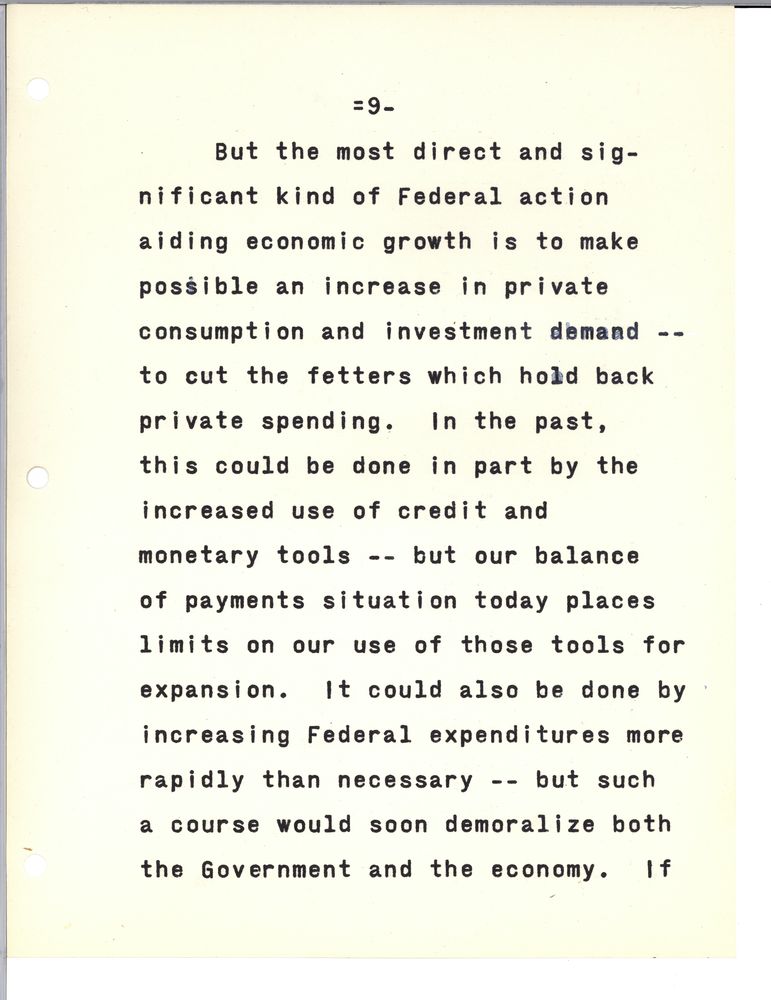
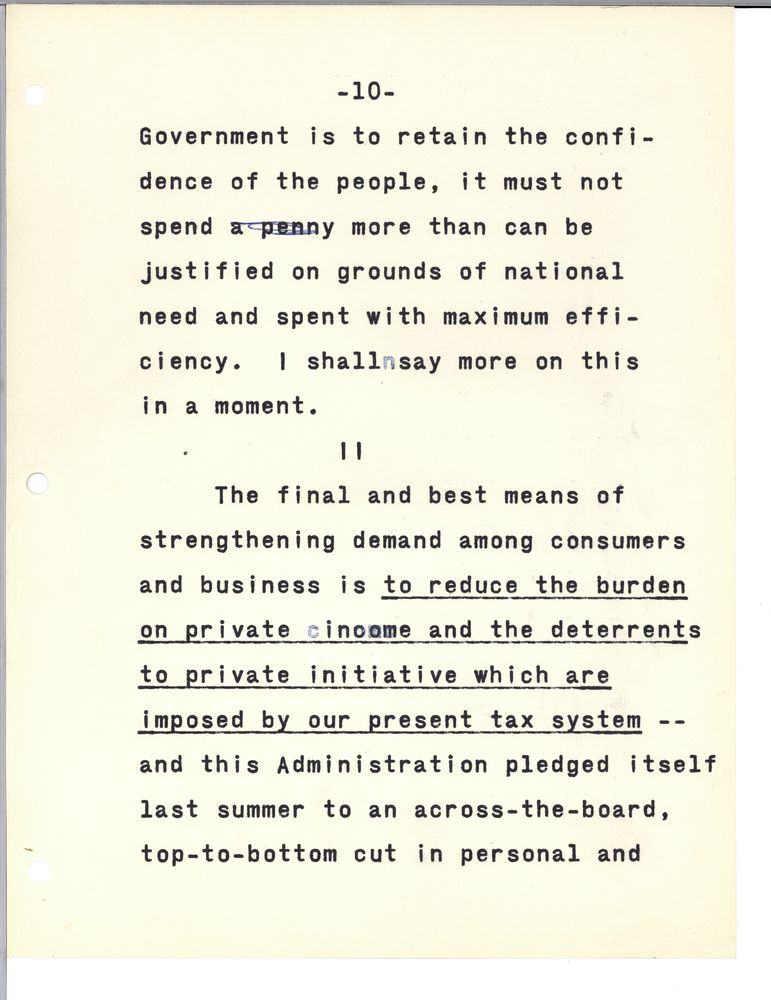
But the most direct and significant kind of federal action aiding economic growth is to make possible an increase in private consumption and investment demand -- to cut the fetters which hold back private spending. In the past, this could be done in part by the increased use of credit and monetary tools, but our balance of payments situation today places limits on our use of those tools for expansion. It could also be done by increasing federal expenditures more rapidly than necessary, but such a course would soon demoralize both the government and our economy. If government is to retain the confidence of the people, it must not spend more than can be justified on grounds of national need or spent with maximum efficiency. And I shall say more on this in a moment.

The final and best means of strengthening demand among consumers and business is to reduce the burden on private income and the deterrents to private initiative which are imposed by our present tax system -- and this administration pledged itself last summer to an across-the-board, top-to-bottom cut in personal and corporate income taxes to be enacted and become effective in 1963.

I'm not talking about a "quickie" or a temporary tax cut, which would be more appropriate if a recession were imminent. Nor am I talking about giving the economy a mere shot in the arm, to ease some temporary complaint. I am talking about the accumulated evidence of the last five years that our present tax system, developed as it was, in good part, during World War II to restrain growth, exerts too heavy a drag on growth in peace time; that it siphons out of the private economy too large a share of personal and business purchasing power; that it reduces the financial incenitives [sic] for personal effort, investment, and risk-taking. In short, to increase demand and lift the economy, the federal government's most useful role is not to rush into a program of excessive increases in public expenditures, but to expand the incentives and opportunities for private expenditures.


source: American Rhetoric: John F. Kennedy - Address to the Economic Club of New York