Showing posts with label language. Show all posts

Monday, November 4, 2013

#THISisShibboleth

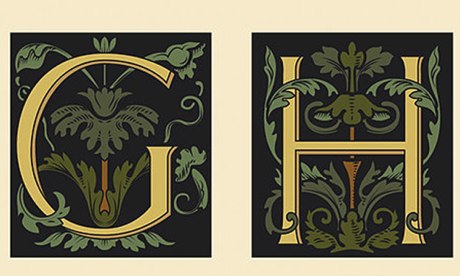
While writing my book, Alphabetical, about the history of the letters we use, I discovered that debates about power and class surround every letter – and none more so than the letter H.
Is it 'aitch' or 'haitch'? Photograph: Alamy
The alphabet is something not to be argued with: there are 26 letters in as fixed a sequence as the numbers 1-26; once learned in order and for the "sounds they make", you have the key to reading and the key to the way the world is classified. Or perhaps not.
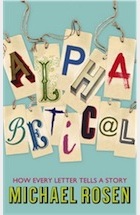
Alphabetical: How Every Letter Tells a Story
by Michael Rosen
Actually, in the course of writing my book about the history of the letters we use, Alphabetical, I discovered that the alphabet is far from neutral. Debates about power and class surround every letter, and H is the most contentious of all. No other letter has had such power to divide people into opposing camps.

In Britain, H owes its name to the Normans, who brought their letter "hache" with them in 1066. Hache is the source of our word "hatchet": probably because a lower-case H looks a lot like an axe. It has certainly caused a lot of trouble over the years. A century ago people dropping their h's were described in the Times as "h-less socialists." In ancient Rome, they were snooty not about people who dropped their Hs but about those who picked up extra ones. Catullus wrote a nasty little poem about Arrius (H'arrius he called him), who littered his sentences with Hs because he wanted to sound more Greek. Almost two thousand years later we are still split, and pronouncing H two ways: "aitch", which is posh and "right"; and "haitch", which is not posh and thus "wrong". The two variants used to mark the religious divide in Northern Ireland – aitch was Protestant, haitch was Catholic, and getting it wrong could be a dangerous business.

Perhaps the letter H was doomed from the start: given that the sound we associate with H is so slight (a little outbreath), there has been debate since at least AD 500 whether it was a true letter or not. In England, the most up-to-date research suggests that some 13th-century dialects were h-dropping, but by the time elocution experts came along in the 18th century, they were pointing out what a crime it is. And then received wisdom shifted, again: by 1858, if I wanted to speak correctly, I should have said "erb", "ospital" and "umble".

The world is full of people laying down the law about the "correct" choice: is it "a hotel" or "an otel"; is it "a historian" or "an historian"? But there is no single correct version. You choose. We have no academy to rule on these matters and, even if we did, it would have only marginal effect. When people object to the way others speak, it rarely has any linguistic logic. It is nearly always because of the way that a particular linguistic feature is seen as belonging to a cluster of disliked social features. Writing this book has been a fascinating journey: the story of our alphabet turns out to be a complex tug of war between the people who want to own our language and the people who use it. I know which side I'm on.
source:
Why H is the most contentious letter in the alphabet | Science | The Guardian

Friday, July 26, 2013

#THISisMyFort

The use and meaning of forte and fort are pretty simple. It's the use and meaning of forte and forte that cause problems.

We have in English three words that came to us from the same ultimate source by different routes. The word fort, which means 'a location occupied by troops and surrounded by defensive works' or more broadly 'any permanent army post' or figuratively 'any strong position that one defends', comes from Middle French and is derived from Latin fortis 'strong'. Fort is pronounced the way you think it is and nothing about the word is complicated.

There are two different (but etymologically related) words forte. One is a musical term, meaning 'loud; with force' or in other parts of speech 'loudly' and 'a loud passage', all of which are contrasted with piano. This word, which is pronounced FOR-tay, is from Italian, ultimately from the same Latin fortis mentioned above.

The other forte is from French fort, the same source as the fort meaning 'defensive military location' we just discussed. The French word is fort, masculine, not forte; the -e is a false feminine ending, by analogy with such words as morale and also by confusion with the Italian forte. Its original meaning is 'the part of a sword or foil blade between the hilt and the middle, stronger than the foible', but the common sense is 'one's strong point; an ability or role in which one excels; specialty'.

The pronunciation of forte 'strong point' is a subject of much debate. The most common pronunciation--by far--in America is FOR-tay, the same as the Italian musical term. Conservative usage writers usually insist that this pronunciation is wrong, and only the pronunciation FORT (identical to the word fort 'defensive military location') is acceptable. The rationale is that the French word forte should be pronounced like fort in English; people who pronounce is FOR-tay are either confusing it with the Italian musical term or are assuming that it's spelled forté, which would be pronounced FOR-tay. (In fact, the word is occasionally found in print in the forté spelling, confirming that people do make that mistake.)

There are several problems with this argument. First, the French word is simply not forte, it is fort, so the forte spelling is wrong from the start. Second, the correct French word fort is pronounced FOR, without a "t." Thus, anyone claiming that the FORT pronunciation is correct because of any connection with French is simply wrong. Another factor is that French words can be Anglicized however we see fit--Merriam-Webster's Dictionary of English Usage points out that the punctuation mark (') is pronounced uh-PAHS-tro-fee in English, even though it "should" be pronounced ah-pahs-TROPH, since it's from French. Finally, there's the point that the FOR-tay pronunciation is so common that most people now have never heard of the FORT pronunciation and will think it's wrong.

None of this, of course, makes FOR-tay a correct pronunciation; it comes from a mistake of one kind or another. But there is no pronunciation of forte 'strong point' that is etymologically acceptable, so it comes down to a question of choosing which error you want to go with. FORT is favored by the more conservative, but is much less familiar; FOR-tay is far more common but is thought to be wrong by people who bother expressing opinions on such matters. The choice is yours.

source:
The Mavens' Word of the Day - forte and fort